Choosing between 2D, 3D, or motion graphics can feel overwhelming. This guide breaks down each animation style in simple terms, helping brands in Malaysia and Singapore choose the right approach based on goals, audience, budget, and timeline — not trends.
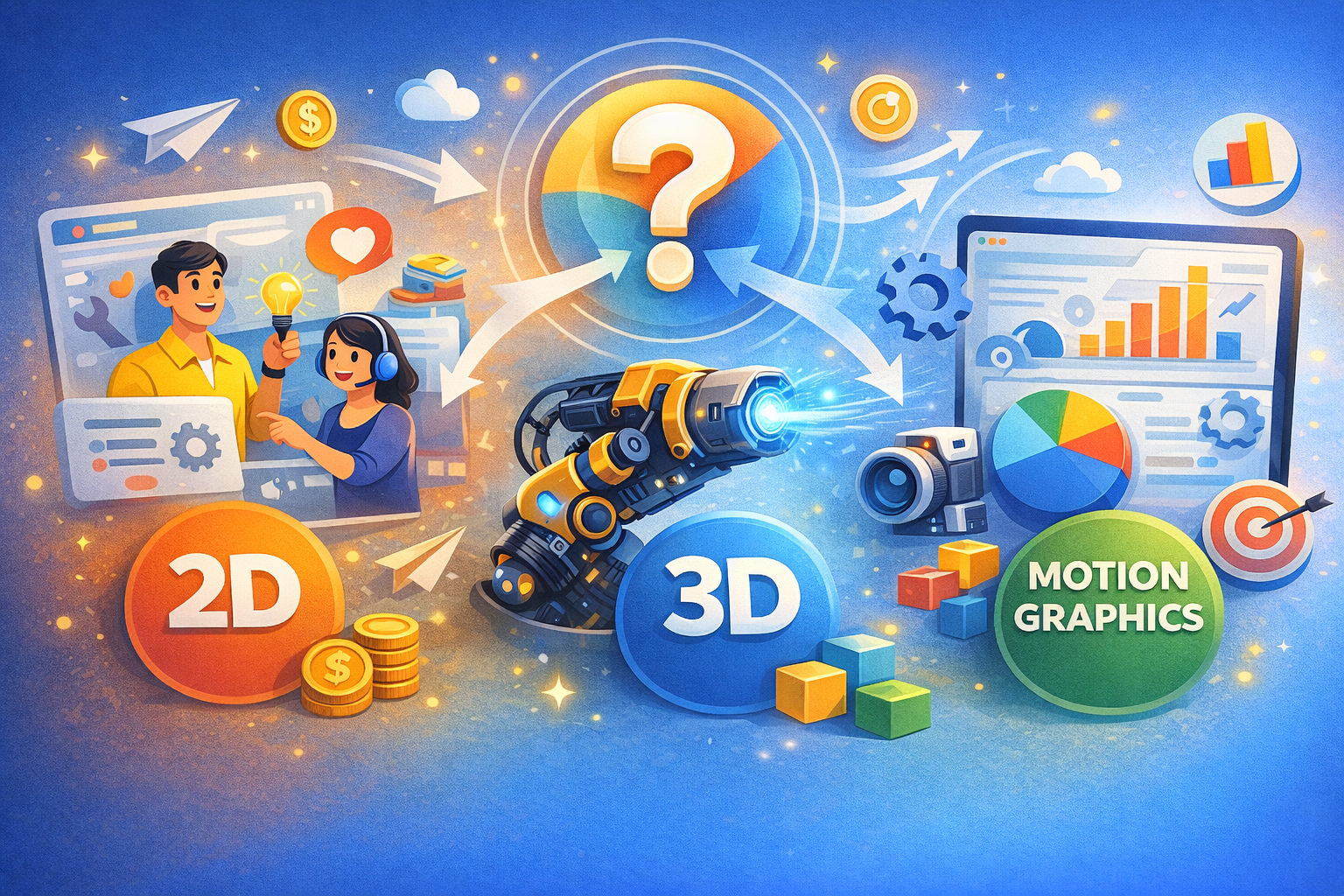
Choosing an animation style sounds simple—until you actually have to decide.
2D, 3D, motion graphics… they all look good. They all “work.” But choosing the wrong style can waste budget, confuse your audience, or make your message fall flat.
For brands in Malaysia and Singapore, where attention is short and competition is intense, animation style isn’t just a design choice—it’s a business decision.
This guide breaks it down in plain language, so you can pick the right animation style based on what you’re trying to achieve, not trends.
Animation isn’t just about looking nice. The style you choose affects:
A fintech explainer, a festive campaign, and an industrial product demo should never use the same animation approach.
The best animation style is the one that makes your message clearer, not flashier.
2D animation is flat, illustrated, and usually character- or icon-driven.
2D animation is simple, fast, and highly flexible. It’s especially popular for:
Many brands in Malaysia use 2D animation for explainers because it removes intimidation. People feel comfortable watching it.
If your goal is clarity first, 2D is usually the safest choice.
3D animation adds depth, realism, and cinematic polish.
3D animation can show things cameras can’t:
This is why many industrial, medical, engineering, and manufacturing brands in Malaysia and Singapore rely on 3D animation.
3D costs more—but when used correctly, it builds instant credibility.
Motion graphics focus on shapes, icons, typography, charts, and transitions—without characters or realism.
Motion graphics are extremely efficient. They:
Banks, fintech companies, SaaS brands, and corporate teams in Singapore often prefer motion graphics because they feel modern and structured.
If your message is logical rather than emotional, motion graphics usually win.
Before deciding, ask yourself these five questions:
Explaining a concept? Showing a product? Creating awareness?
Different goals = different styles.
General public, decision-makers, engineers, investors?
Your audience determines complexity and tone.
Social media, website, sales deck, exhibition screen?
Platform affects style and pacing.
2D and motion graphics are usually faster than 3D.
A smaller budget doesn’t mean bad quality—it just means choosing the right approach.
Use this as a quick reference:
There’s no “best” style—only the right fit.
Each worked because the style matched the goal, not because it followed a trend.
At ENZTV, we don’t start with “Do you want 2D or 3D?”
We start with:
From there, we recommend the style that gives you the best clarity, impact, and ROI—whether that’s 2D, 3D, motion graphics, or a hybrid.
Our job isn’t to sell animation.
It’s to make sure your message lands.
Animation style should never be chosen just because it “looks cool.”
The right style:
If you’re unsure which direction to take, that’s normal. Most brands are.
👉 Talk to ENZTV. We’ll help you choose the animation style that fits your story—clearly, confidently, and strategically.


With genuine passion, a love for motion, and coffee fuelling our way, no frame goes unnoticed.
© 2024 ENZTV MEDIA DESIGN (UEN53420994K). All Rights Reserved.
